

A Devotee Has Conquered the Six Qualities (Sajjana–Vijita Ṣaḍ-guṇa)
Continuing Śrīla Sarasvatī Ṭhākura's teachings on the twenty-six qualities of a devotee, this essay examines vijita ṣaḍ-guṇa – conquering the six qualities of hunger, thirst, greed, delusion, old age and death. A devotee who takes exclusive shelter of Kṛṣṇa remains untouched by these material transformations, and by taking shelter of such devotees, a conditioned jīva can also attain pure bhakti.

Bhāgavatam, Bhakti, and Brahmā – Questions & Answers
Over the last few months, we have received a number of questions on various spiritual topics, which Gaura Gopāla Dāsa Brahmacārī has answered. For the benefit of our readers, we are pleased to publish these questions and answers below.

A Devotee is Stable (Sajjana-sthira)
Continuing Śrīla Sarasvatī Ṭhākura's teachings on the twenty-six qualities of a devotee, this essay (from Sajjana Toṣaṇī, Vol.21, Issue 7, from 1918) explains the importance of stability (sthira) in the life of a Vaiṣṇava, and how stability is an innate quality of the ātmā itself.

A Response to Bose Saheb’s Questions
The following essay by Śrīla A.C. Bhaktivedānta Swami Prabhupāda was published in Śrī Gauḍīya Patrikā (Vol. 1, Issue 5) in 1949. In an earlier issue, the magazine had published a letter from Mr. Jitendra Narayana Bose containing a number of philosophical questions. In this article, Śrīla Prabhupāda responds to the first of those questions, examining who may properly be described as a pure Vaiṣṇava, while also distinguishing pure devotees, mixed devotees, and those who are Asuras.
A Devotee is Free from Personal Endeavour (Sajjana-Nirīha)
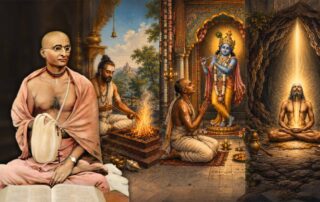
Continuing Śrīla Sarasvatī Ṭhākura's teachings on the twenty-six qualities of a devotee, this article explains the true meaning of nirīha – the quality of a saintly devotee being free from selfish endeavour. Sarasvatī Ṭhākura clarifies that this does not indicate inactivity, but rather freedom from material pursuits while being fully engaged in eternal service to Śrī Hari. Originally published in Sajjana Toṣaṇī, Vol. 21, Issue 5, 1918.

A Devotee is Desireless (Sajjana-Akāma)
Continuing Śrīla Sarasvatī Ṭhākura’s teachings on the twenty-six qualities of a devotee, this article – originally published in Sajjana Toṣaṇī (Vol. 21, Issue 4, 1918) – explains that only a pure devotee is truly free from all desire. Those whose devotion is mixed remain filled with various aspirations and can never properly be described as akāma (desireless).

A Devotee Takes Exclusive Shelter of Kṛṣṇa (Sajjana – Kṛṣṇaika-śaraṇa)
We continue the twenty-six qualities of a devotee, with Śrīla Sarasvatī Ṭhākura’s explanation of kṛṣṇaika-śaraṇa – taking exclusive shelter of Kṛṣṇa. This article was first published in Sajjana Toṣaṇī, Vol. 21, Issue 3, in 1918.

Misuse of Money in the Name of Religion?
This article (originally in Hindi) by Śrīla A.C. Bhaktivedanta Swami Prabhupāda, was first published in Bhāgavat Patrikā, Vol. 7, Issue 1 (June 1961). In it, Śrīla Prabhupāda reflects on a speech by the then prime minister, Pandit Jawaharlal Nehru concerning misuse of money in the name of religion in āśramas and maṭhas. Prabhupāda proposes the establishment of a ‘Bhagavad-gītā Department’ within the government, and includes a personal letter to Nehru offering suggestions for guiding India toward a more spiritually grounded national direction. This article is as relevant today as it was sixty-four years ago - if not more so.
A Devotee is Peaceful (Sajjana Śānta)
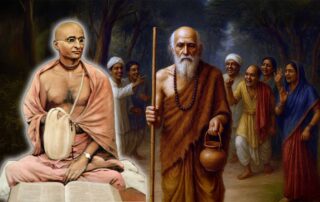
Continuing with the explanation on the twenty-six qualities of a devotee by Prabhupāda Sarasvatī Ṭhākura. In this article, ‘A Devotee is Peaceful’ (Sajjana Śānta) from Sajjana Toṣaṇī (Vol.21, Issue 2) published in 1918, Sarasvatī Ṭhākura describes how only a devotee is truly peaceful, and gives the example of the tridaṇḍī sannyāsī of Avantī, who remained calm, even in the midst of intense harassment.
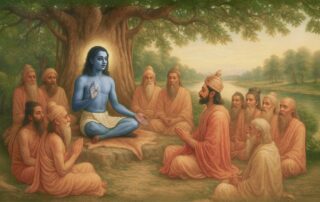
Śrī Bhāgavata Naiṣkarmya (Selfless Action in the Śrīmad Bhāgavatam)
“Selfless Action in the Śrīmad Bhāgavatam” (Śrī Bhāgavata Naiṣkarmya) was first published in Śrī Gauḍīya Darśana magazine (Vol.2, Issue 9 and Vol.3, Issue 3) in 1957. Śrīla Śrīdhara Mahārāja describes how humans are constantly forced to work in order to survive, and how the Śrīmad Bhāgavatam presents a positive alternative.