
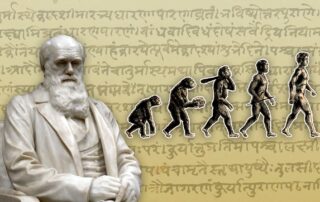
Did Darwin Borrow His Theory of Evolution from the Vedas?
Kalki Dāsa explores the history of the development of Charles Darwin's theory of evolution. He raises the question whether this theory put forth in Darwin's book 'On the Origin of Species' was borrowed from the Vedic texts and discovers some very interesting answers.
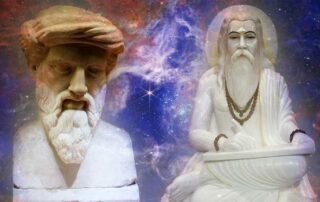
Rational Vedānta
'Rational Vedānta' was written by Swami B.G. Narasingha in October 2006 as an opening statement for a new website he had begun which compared western philosophies with eastern thought. In this article, Narasingha Maharaja explains the meaning of 'Rationalism' and 'Vedānta'. Vedantic and Pythagorean thinking, the stages of realisation according to Vedānta philosophy, and the defects of the so-called Rationalism in today's world.
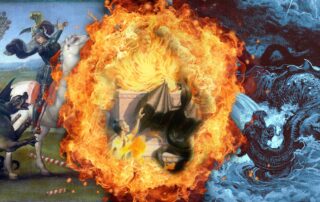
“Here Be Dragons!”
In 'Here Be Dragons!' Kalki Dāsa explores the mythical fire-breathing monsters of yore, and discovers that although these creatures are present within many different ancient cultures, the dragon prototype seems to be found in the Vedic literature.
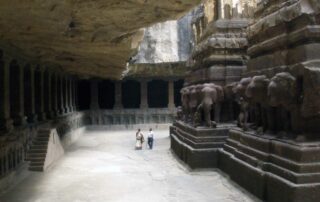
Lost Ancient Technology
In 'Lost Ancient Technology' Kalki Dasa argues that the technology of ancient civilisations such as Vedic India may have been more advanced than is currently believed, and that this idea has been dismissed by establishment science due to biases and a belief in linear evolution under the sway of Eurocentricism.
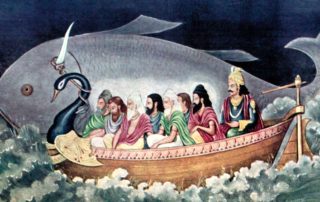
The Great Flood – Are Manu and Noah the Same Person?
In 'The Great Flood - Are Manu and Noah the Same Person?' Kalki Dasa explores the ancient flood myths from around the world and particularly those from ancient India and Mesopotamia. This article finds the connection between all these stories and a common source from which they may have originated - as well investigates whether or not this ancient flood actually occurred.
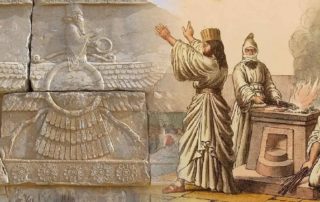
Zarathustra and The De-evolution of Theism
In 'Zarathustra and The De-evolution of Theism' Kalki Dāsa narrates the ancient Purāṇika story of Jaraśastra of India and how he brought monotheism to the west through his new religion which became known as Zoroastrianism. Kalki also shows correlations between Zoroastrianism and the other Abrahamic religions.
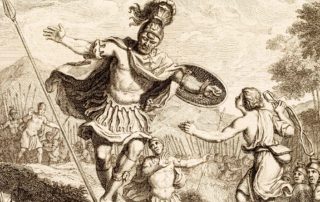
Giants – Myth or Fact?
In this historical essay, 'Giants - Myth or Fact?', Śrīla Narasiṅgha Mahārāja gives various evidence from śāstra for the existence of giants, and looks at the phenomenon in other cultures, as well as some modern day hoaxes.
Vedic Global Civilisation
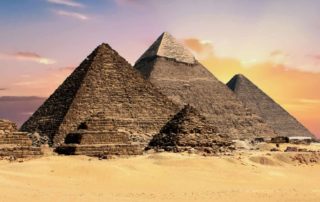
Did some of the world's most ancient cultures originate from a single civilisation based in Vedic India? Swami B.G. Narasiṅgha investigates and looks at possible links between the subcontinent and other civilisations.

Sindhu River – How India Got Her Name
'Sindhu River - How India Got Her Name' was first written in April 2017 by Swami B.G. Narasingha. In this article, Swami Narasingha gives a history of the Sindhu River and how Bhārata-varṣa came to be known as India. He also discusses the notion that Jesus came to India.
Vaiṣṇavism and Religious Equality
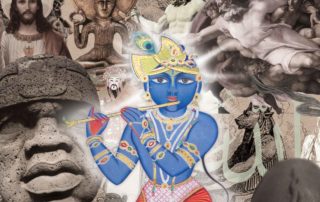
In 'Vaiṣṇavism and Religious Equality' Gaura Gopala Dasa looks at the history of religion and explores the notion that everyone "worships the same God" and points out how the Abrahamic 'God' cannot be the same as the God that is worshipped by Vaiṣṇavas.