

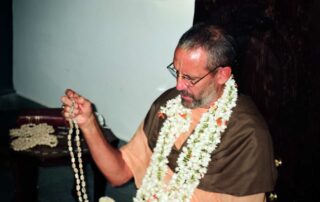
Hari-Nāma Initiation
The following article is based upon a letter exchange between Śrīla Narasiṅgha Mahārāja and a godbrother-guru which took place in 1998. His godbrother asks what hari-nāma initiation actually is and what transpires between the guru and disciple at that time.

Questions and Answers on Nāma-Tattva
The following excerpt is from an upcoming publication of questions and answers with Śrīla B.G. Narasiṅgha Mahārāja. In this selection, Śrīla Narasiṅgha Mahārāja answers various questions concerning the chanting of the Holy Name.
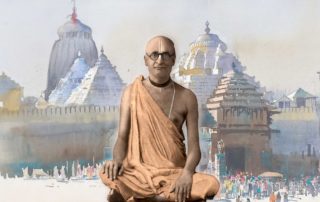
Hari-kathā in Puruṣottama-kṣetra
In 'Hari-kathā in Puruṣottama-kṣetra' Śrīla Bhaktisiddhānta Sarasvatī Ṭhākura speaks in Jagannātha Purī about the necessity for hari-kātha (topics of Kṛṣṇa) and the constant chanting of the Lord's Name. He also explains what is actual kīrtana and what is not. This article was first published in The Gauḍīya, Volume 14, issue 37, and translated from Bengali by Swami B.V. Giri and Sanātana Dāsa.
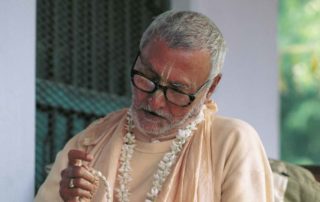
Śrī Nāma Māhātmya (The Glories of the Holy Name)
In Śrī Nāma Māhātmya (The Glories of the Holy Name), Śrīla Śrīdhara Mahārāja gives a detailed explanation of the gradual development of the Holy Name according to the eight verses of Śrīla Bhaktivinoda Ṭhākura’s ‘Nāma Māhātmya’ from ‘Śaraṇāgati.’ This edited transcript was originally spoken on October 2nd 1981.

Gānera adhikārī ke? (Who is Qualified to Sing?)
Who is actually qualified to lead kīrtana? In this article from 1916, Śrīla Sarasvatī Ṭhākura clearly explains the adhikāra (qualification) for one to lead kīrtana and states that it is not all about melody etc. This article has been translated from Bengali by Swami B.V. Giri.
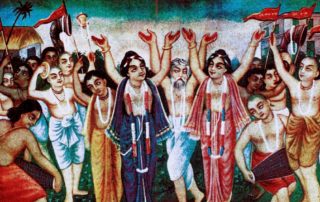
The Descent of the Holy Name
'The Descent of the Holy Name' is the introduction to our book "The Descent of the Holy Name". The introduction is written by Śrīpāda Bhakti Kiśora Araṇya Mahārāja.
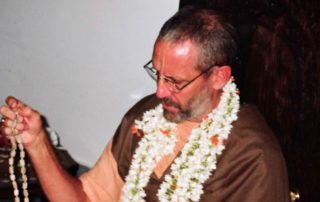
The Mahā Mantra
The Mahā-mantra” was written by Swami B.G. Narasiṅgha in 2008. This article explains the history of the Mahā-mantra and the various conceptions of the Mahā-mantra according to the different sampradāyas, including the Madhvas, Rāmānujas, Vallabhas and Nimbārkas.
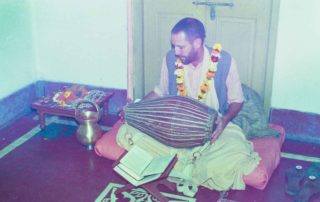
Meditation Techniques and the Holy Name
‘Meditation Techniques and the Holy Name’ was written by Swami Narasingha in October 2006. Narasingha Maharaja discusses the age-old problem of distraction during japa, and gives advice based upon Sanātana Gosvāmī and Bhaktivinoda Ṭhākura on how to combat this.
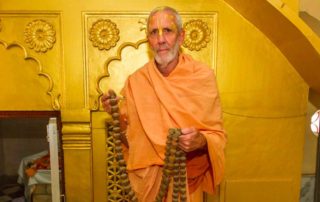
Chanting the Holy Name
Written by Śrīla Narasiṅgha Mahārāja in October 2003, “Chanting the Holy Name” answers the question, ‘In what mood do we chant the Holy Name, and what should be our meditation?’
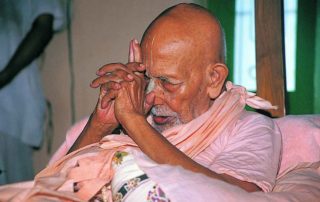
The Internal Meaning of Ratha Yātrā and Nāma Bhajana
This article was a lecture given by Śrīla Bhakti Pramoda Purī Mahārāja at Gopīnatha Gauḍīya Maṭha, Jagannātha Purī on the day of Herā Pañcamī, June 29th 1998. In this talk, Śrīla Purī Gosvāmī discusses the importance of pure nāma-bhajana as the qualification to discuss higher topics of kṛṣṇa-līlā.