


Overview
Continuing Śrīla Sarasvatī Ṭhākura's teachings on the twenty-six qualities of a devotee, this essay (from Sajjana Toṣaṇī, Vol.21, Issue 7, from 1918) explains the importance of stability (sthira) in the life of a Vaiṣṇava, and how stability is an innate quality of the ātmā itself.
The nature of the ātmā is unchanging. The nature of the mind and body is subject to transformation. That which is impermanent and changeable can never be stable. One cannot place one’s trust in things that are subject to change. The body is not eternal, and the mind also gathers its unwholesome tendencies from impermanent things – thus, both are unstable.
Driven by the impulses of their immediate mental tendencies, the body and mind call forth various kinds of undertakings. When restlessness is removed, the eternal nature of the ātmā – stability – is realised. A devotee of Bhagavān does not engage in things that are subject to transformation and impermanence. Until the mental faculty is engaged in the service of Bhagavān, the jīva does not abandon his unstable nature. As long as the mind’s desires are driven toward the service of unstable things, there is no possibility of attaining permanence or steadiness. Those devotees who are devoted to the service of Hari are always steady. Bhagavān is the embodiment of stability, and there are many practices conducive to the steadfast disposition of the devotees.
After analysing the Yoga philosophy of Patañjali Ṛṣi, one might think that citta-vṛtti-nirodha (calming the fluctuating thoughts of the mind) can be achieved by artificial means. Again, through īśvara-praṇidhāna (‘dedication to the Supreme’), the mind becomes steady. However, the steadiness sought through practices such as śama and dama (internal and external restraint) is itself subject to transformation and is a preliminary state leading to instability. True stability is not possible through yoga with impermanent fluctuating thoughts unless one’s endeavors are directed toward Bhagavān, the Eternal Reality.
Neither those motivated by material desires nor the jñānīs are truly steady. Always restless because of their respective deficiencies, they merely invoke various imagined, impermanent forms of instability in an attempt to become steady. Considering themselves to be deficient and unhappy, they roam about with the hope of attaining the objects they desire. Especially when there is a disparity between the sādhana (practice) and the sādhya (goal), the ultimate result is instability. In other words, a difference between the means and the end obstructs permanence.
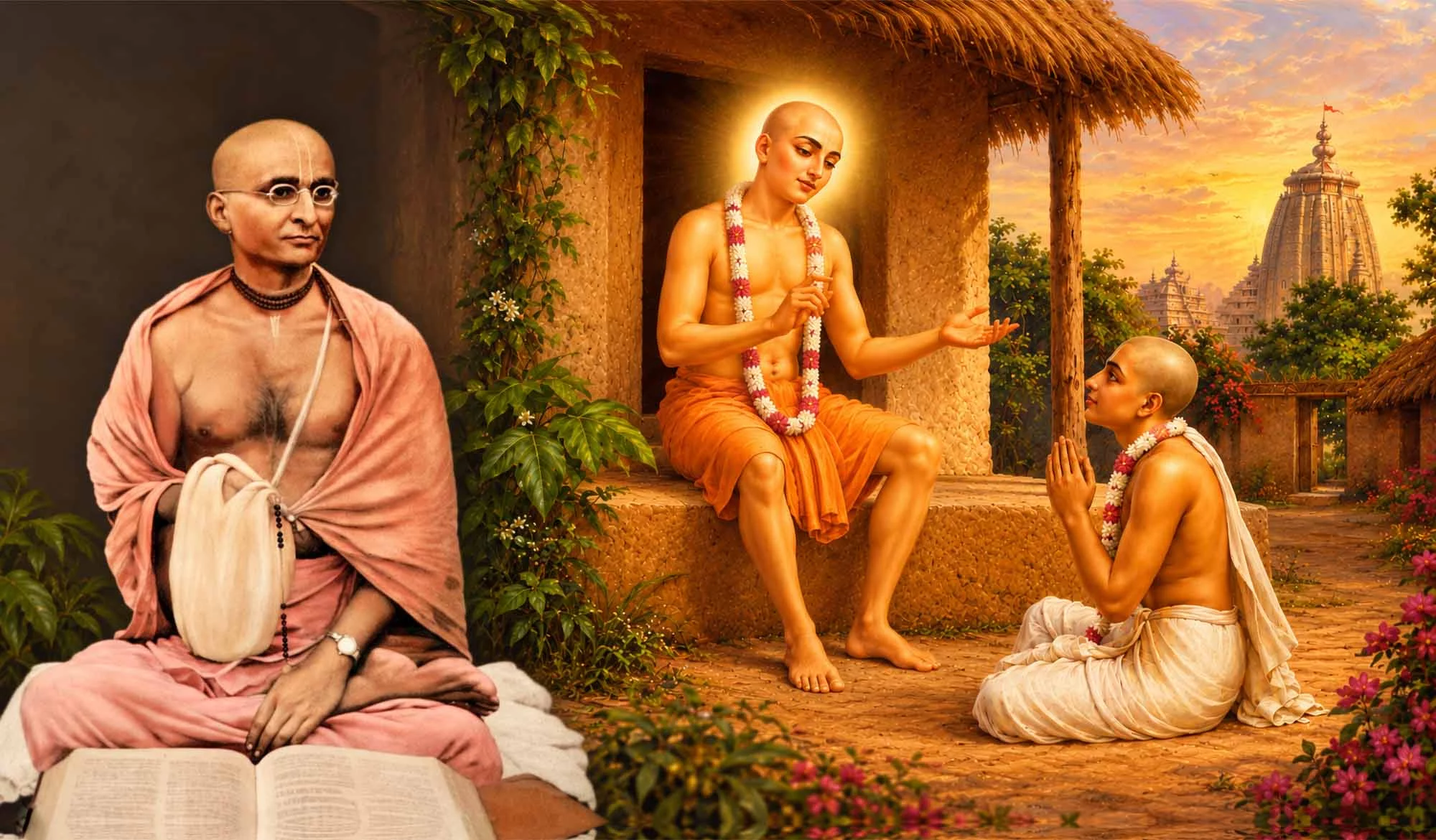
One day, Śrī Gaurasundara said to Śrī Raghunātha Dāsa:
sthira hañā ghare yāha, nā hao vātula
krame krame pāya loka bhava-sindhu-kūla
Become steady and go home. Do not become mad. Gradually, in due course, one reaches the shore of the ocean of material existence. (Caitanya-caritāmṛta, Madhya-līlā 16.238)
Steadiness is necessary in every undertaking. Unless one possesses patience and perseverance, bhakti does not attain perfection. The inherent nature of that which is not the self is characterised by impermanence and instability. The devotees are not carried away by such things. They remain steadfast in all their activities. Only the devotees can be fully trusted. Their stability is the ideal for the world.
(Translated by Swami Bhaktivijñāna Giri)
Related Articles & Books
- 📚 Twenty-six Qualities of a Devotee Series by Śrīla Bhaktisiddhānta Sarasvatī Ṭhākura
- Vaiṣṇava Nindā by Śrīla Bhaktivinoda Ṭhākura
- The Country’s Misfortune by Śrīla B.R. Śrīdhara Mahārāja
- Śiva-tattva & the Position of Lord Śiva by Śrīla B.R. Śrīdhara Mahārāja
- Oh Bābā! Bolacche-re! by Śrīla B.R. Śrīdhara Mahārāja
- Problems and Solutions by Śrīla B.R. Śrīdhara Mahārāja
- The Highest Attainment and Present Adjustment by Śrīla B.R. Śrīdhara Mahārāja
- Āgun Jvālbe (Light the Fire!) by Śrīla B.R. Śrīdhara Mahārāja
- Dharma and the Modern World by Śrīla A.C. Bhaktivedānta Swami Prabhupāda
- Faith Confirms the Absolute by Śrīla B.G. Narasiṅgha Mahārāja
- Go Deeper! by Śrīla B.G. Narasiṅgha Mahārāja
- To Be a Servant by Śrīla B.G. Narasiṅgha Mahārāja
- Harmony – Real and Apparent by Swami B.V. Giri
- The Definition of Faith by Gaura Gopāla Dāsa
- Ātma Samīkṣā – The Value of Introspection by Kalki Dāsa
- Frogs in the Well of Prejudice by Kalki Dāsa
Further Reading from the Bhaktivinoda Institute
- Śraddhā (Faith) – Quotes by Bhaktivinoda Thakura
- Śraddhā and Śaraṇāgati by Śrīla Bhaktivinoda Ṭhākura
- The Association of Sādhus by Śrīla Bhaktivinoda Ṭhākura
- Epilogue to Śrī Kṛṣṇa Karṇāmṛta by Śrīla Bhaktivinoda Ṭhākura
- Prīti (Love) by Śrīla Bhaktivinoda Ṭhākura
- A Dispute Concerning Mahāprasāda by Śrīla Bhaktivinoda Ṭhākura
- Śraddhā by Śrīla Bhaktivinoda Ṭhākura
- Materialistic Association by Śrīla Bhaktivinoda Ṭhākura
- Dispelling Doubts by Śrīla Bhaktivinoda Ṭhākura
- The Enemy by Śrīla Bhaktivinoda Ṭhākura
- A Critique of the book ‘Vanamālā’ by Śrīla Bhaktivinoda Ṭhākura
- Kali by Śrīla Bhaktivinoda Ṭhākura
- Offences Against Bhakti by Śrīla Bhaktivinoda Ṭhākura
- Kārttika-vrata by Śrīla Bhaktivinoda Ṭhākura
- Violence and Mercy by Śrīla Bhaktivinoda Ṭhākura
- Abandoning Bad Association by Śrīla Bhaktivinoda Ṭhākura
- Sad-guṇa and Bhakti by Śrīla Bhaktivinoda Ṭhākura
- The Process of Initiation by Śrīla Bhaktivinoda Ṭhākura
- Dainya (Humility) by Śrīla Bhaktivinoda Ṭhākura
- Vaiṣṇava Nindā (Offences to Devotees) by Śrīla Bhaktivinoda Ṭhākura