

Articles by Śrīla Bhaktisiddhānta Sarasvatī Ṭhākura

A Devotee Has Conquered the Six Qualities (Sajjana–Vijita Ṣaḍ-guṇa)
Continuing Śrīla Sarasvatī Ṭhākura's teachings on the twenty-six qualities of a devotee, this essay examines vijita ṣaḍ-guṇa – conquering the six qualities of hunger, thirst, greed, delusion, old age and death. A devotee who takes exclusive shelter of Kṛṣṇa remains untouched by these material transformations, and by taking shelter of such devotees, a conditioned jīva can also attain pure bhakti.

A Devotee is Stable (Sajjana-sthira)
Continuing Śrīla Sarasvatī Ṭhākura's teachings on the twenty-six qualities of a devotee, this essay (from Sajjana Toṣaṇī, Vol.21, Issue 7, from 1918) explains the importance of stability (sthira) in the life of a Vaiṣṇava, and how stability is an innate quality of the ātmā itself.
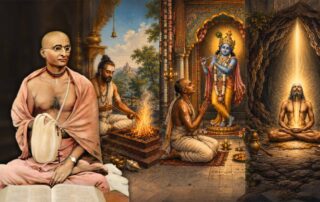
A Devotee is Free from Personal Endeavour (Sajjana-Nirīha)
Continuing Śrīla Sarasvatī Ṭhākura's teachings on the twenty-six qualities of a devotee, this article explains the true meaning of nirīha – the quality of a saintly devotee being free from selfish endeavour. Sarasvatī Ṭhākura clarifies that this does not indicate inactivity, but rather freedom from material pursuits while being fully engaged in eternal service to Śrī Hari. Originally published in Sajjana Toṣaṇī, Vol. 21, Issue 5, 1918.

Śrīla Prabhupāda and Prof. Phaṇibhūṣaṇa Adhikārī
This article is a discussion between Prabhupāda Śrīla Bhaktisiddhānta Sarasvatī Ṭhākura and Professor Phaṇibhūṣaṇa Adhikārī on the limits of logic and the role of revelation in spiritual knowledge. Sarasvatī Ṭhākura argues that the Absolute Truth is realised through guru, śruti, and divine grace rather than independent speculation. The conversation concludes by affirming bhakti, hari-kathā, and śaraṇāgati (surrender) as the highest goal of life. This conversation was first published in The Gauḍīya (Vol. 12, Issue 35) in 4th April, 1934. Translated into English by Śrī Sanātana Dāsa Adhikārī and Parameśvarī Devī Dāsī.
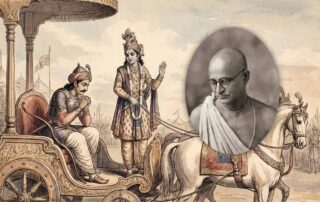
Sarasvatī Ṭhākura’s Introduction to Bhagavad-gītā
The following is Śrīla Bhaktisiddhānta Sarasvatī Ṭhākura’s introduction to the Bhagavad-gītā with the Gītā Bhūṣaṇa commentary of Śrī Baladeva Vidyābhūṣaṇa, published by Śrī Gauḍīya Maṭha in 1931. Sarasvatī Ṭhākura gives a brief biography of Baladeva, and explains how the sahajiyās and smārtas oppose the true path of bhakti.

A Devotee is Desireless (Sajjana-Akāma)
Continuing Śrīla Sarasvatī Ṭhākura’s teachings on the twenty-six qualities of a devotee, this article – originally published in Sajjana Toṣaṇī (Vol. 21, Issue 4, 1918) – explains that only a pure devotee is truly free from all desire. Those whose devotion is mixed remain filled with various aspirations and can never properly be described as akāma (desireless).
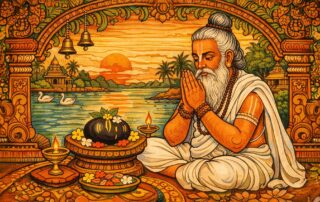
Śrīmad Advaita Prabhu
This article is an English lecture by Śrīla Bhaktisiddhānta Sarasvatī Prabhupāda which was transcribed and published in The Harmonist magazine (Vol.34, Issue 1) on August 17th, 1937. Herein, Sarasvatī Ṭhākura discusses the ontological position of Śrī Advaita Ācārya Prabhu.

A Devotee Takes Exclusive Shelter of Kṛṣṇa (Sajjana – Kṛṣṇaika-śaraṇa)
We continue the twenty-six qualities of a devotee, with Śrīla Sarasvatī Ṭhākura’s explanation of kṛṣṇaika-śaraṇa – taking exclusive shelter of Kṛṣṇa. This article was first published in Sajjana Toṣaṇī, Vol. 21, Issue 3, in 1918.
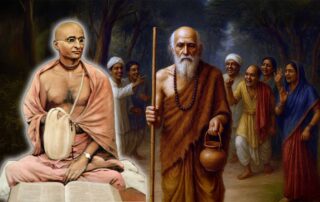
A Devotee is Peaceful (Sajjana Śānta)
Continuing with the explanation on the twenty-six qualities of a devotee by Prabhupāda Sarasvatī Ṭhākura. In this article, ‘A Devotee is Peaceful’ (Sajjana Śānta) from Sajjana Toṣaṇī (Vol.21, Issue 2) published in 1918, Sarasvatī Ṭhākura describes how only a devotee is truly peaceful, and gives the example of the tridaṇḍī sannyāsī of Avantī, who remained calm, even in the midst of intense harassment.
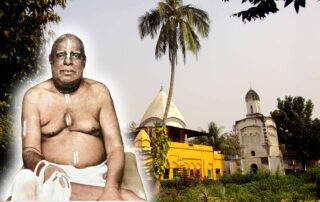
Śrīla Bhaktivinoda in Gauḍacala
This article, by Prabhupāda Śrīla Bhaktisiddhānta Sarasvatī Ṭhākura, was first published in The Gauḍīya magazine (Vol.8, Issue 6) on September 14th 1929, commemorating the 91st appearance day of Śrīla Bhaktivinoda Ṭhākura. Sarasvatī Ṭhākura writes about the deplorable condition of Bengal, and the necessity for the Lord to send His dear associate there to purify the people.