


Articles by Swami B.V. Giri

Prema Dhāma Deva Stotram with the Narasiṅgha Sevaka Commentary – Verses 21-24
In this week's commentary to Prema Dhāma Deva Stotram, the transcendental beauty of Śrīman Mahāprabhu is discussed, the beginning of His travels to South India, and His meeting with Śrī Rāmānanda Rāya on the banks of the Godāvarī River.

Guru-tyāgī, Guru-bhogī and Guru-drohī
In this article, Swami B.V. Giri describes in detail the characteristics of the three types of offenders to Śrī Guru - the guru-tyāgī, guru-bhogī and guru-drohī, and cites the previous ācāryas in explaining the serious offence of guru-avajñā, disobeying the order of the spiritual master.
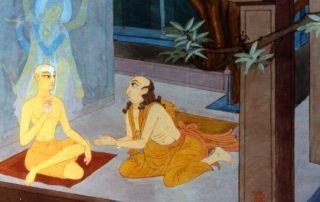
Prema Dhāma Deva Stotram with the Narasiṅgha Sevaka Commentary – Verses 17-20
This week's commentary to Prema Dhāma Deva Stotram by Śrīla Bhakti Rakṣaka Śrīdhara Deva Gosvāmī narrates Mahāprabhu's travels to Rāḍha-deśa, His residing in Jagannātha Purī, and His meeting with the great scholar, Vāsudeva Sārvabhauma Bhaṭṭācārya.
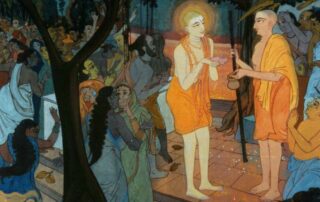
Prema Dhāma Deva Stotram with the Narasiṅgha Sevaka Commentary – Verses 13-16
In this weeks commentary to Prema Dhāma Deva Stotram by Śrīla Bhakti Rakṣaka Śrīdhara Deva Gosvāmī, Giri Mahārāja discusses the conclusion of Mahāprabhu's vidyā-vilāsa (scholastic pastimes), His inauguration of saṅkīrtana in Navadvīpa, His defeat of the Kazi and His acceptance of sannyāsa.
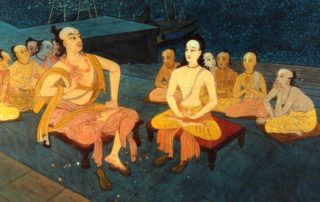
Prema Dhāma Deva Stotram with the Narasiṅgha Sevaka Commentary – Verses 9-12
In this weeks commentary to Prema Dhāma Deva Stotram by Śrīla Bhakti Rakṣaka Śrīdhara Deva Gosvāmī, we read about the scholastic pastimes of Śrī Caitanyadeva in Navadvīpa, and in particular, his defeat of the Kāśmirī Paṇḍīta, Keśava Bhaṭṭa.
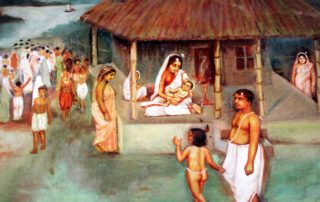
Prema Dhāma Deva Stotram with the Narasiṅgha Sevaka Commentary – Verses 5-8
Continuing with the serialization of Prema Dhāma Deva Stotram by Śrīla Bhakti Rakṣaka Śrīdhara Deva Gosvāmī with the Narasiṅgha Sevaka commentary by Bhakti Vijñāna Giri Mahārāja. This week Giri Mahārāja comments on verses 5-8 relating to the childhood pastimes of Śrīman Mahāprabhu.
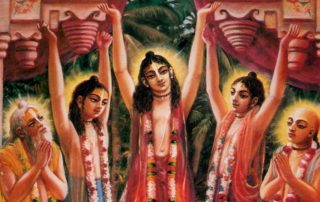
Prema Dhāma Deva Stotram with the Narasiṅgha Sevaka Commentary – Verses 2-4
Continuing with the serialization of Prema Dhāma Deva Stotram by Śrīla Bhakti Rakṣaka Śrīdhara Deva Gosvāmī with the Narasiṅgha Sevaka commentary by Bhakti Vijñāna Giri Mahārāja. This week Mahārāja discusses verses 2-4 concerning the ontology of the Pañca Tattva and how Advaita Ācārya requested Mahāprabhu to descend.
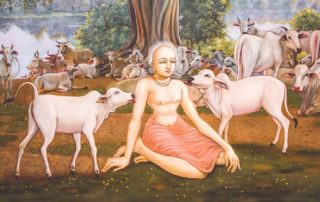
Prema Dhāma Deva Stotram with the Narasiṅgha Sevaka Commentary – Introduction and Verse 1
We begin the serialization of Prema Dhāma Deva Stotram by Śrīla Bhakti Rakṣaka Śrīdhara Deva Gosvāmī with the Narasiṅgha Sevaka commentary by Bhakti Vijñāna Giri Mahārāja. Prema Dhāma Deva Stotram perfectly captures the quintessential ontology of Śrīman Mahāprabhu’s teachings and concisely narrates His divine pastimes.

Coronavirus and the Cultivation of Fear
Swami B.V. Giri discusses the recent outbreak of COVID-19 (coronavirus) and how the real disease that the conditioned jīva cannot escape is that of fear.

An Essential Teaching about the Bhāgavat-Paramparā
Swami B.V. Giri replies to a question concerning the bhāgavat-paramparā as presented by an ācārya in a recent publication, and asks whether the author is trying to ingratiate himself with the sahajiyās and caste-gosvāmīs.